In February 2025, during a visit to a processing unit in Mahuva, I asked a quality manager about moisture specifications. He said, “5-6% for export grade.”
Simple enough. But then I asked, “Why?”
He paused. “That’s what buyers want.”
“But why do they want that specifically?”
“Shelf life. Microbial safety. Transport stability. It’s just… industry standard.”
That conversation made me realize: much of the knowledge in this industry is experiential, passed down through conversations, not documented systematically. People know what works because they’ve seen what fails.
I started taking detailed notes. This article is those notes, organized.
A contact in Dubai mentioned a rejection case in February 2025. A container arrived at Jebel Ali with moisture testing at 7.8% instead of contracted 5.5%. Everything on paper was correct—invoice, packing list, Certificate of Analysis from a recognized lab.
The product was rejected. Detention charges, re-export costs, damaged relationships.
When I asked what went wrong, he said: “Nobody physically verified what was being loaded.”
That’s when I understood: quality in this business isn’t theoretical—it’s measurable, physical, and verifiable.
What I Learned From Seven Processing Facilities
I visited processing facilities in Gujarat (Mahuva, Deesa, Bhavnagar) and Maharashtra (Nashik, Lasalgaon) between January and March 2025. One thing became clear: moisture control is the single most critical parameter.
At a facility in Mahuva, the production manager showed me two batches:
● Batch A: 5.2% moisture → “Gulf markets, 18-month shelf life”
● Batch B: 6.9% moisture → “Domestic, 6-month turnover”
Through multiple conversations, I learned the practical ranges:
Below 5% moisture → Brittle product, excessive breakage during handling. A processor in Deesa: “Under 4.5%, cellular structure breaks down. Wastage increases.”
5.0-6.0% moisture → FSSAI guidelines (FSS Regulations 2011) classify this as export-grade. Most international specifications target this range.
6.0-7.0% moisture → Acceptable for shorter supply chains. A processor: “Bangladesh and Nepal markets often work here—their climate, distribution speed, it works.”
Above 7.0% moisture → Risk zone. A quality manager in Bhavnagar: “Above 7%, you’re gambling with microbial growth, especially in warm storage.”
Why Gulf Markets Are Different
At an industry meeting in Ahmedabad (February 2025), an experienced exporter explained:
“Gulf warehouses hit 45°C in summer. What’s stable at 25°C behaves differently at 40°C+.”
Most experienced exporters target 5.5% max for Gulf shipments during April-September, even
when contracts allow 6%.
“That 0.5% buffer is experience talking.”
The Manufacturing Perspective
During a visit to a food processing unit in Gandhinagar, the production head showed me their automated filling line calibrated for 8-10mm particles.
He showed me samples from two suppliers:
● Sample A: 92% within 8-10mm specification
● Sample B: 68% within range, 32% mixed sizes
“Sample B costs 8% less, but I lose that saving in production downtime.”
Lesson: Particle size consistency isn’t just quality—it’s an operational requirement for industrial users.
Practical Applications I Documented
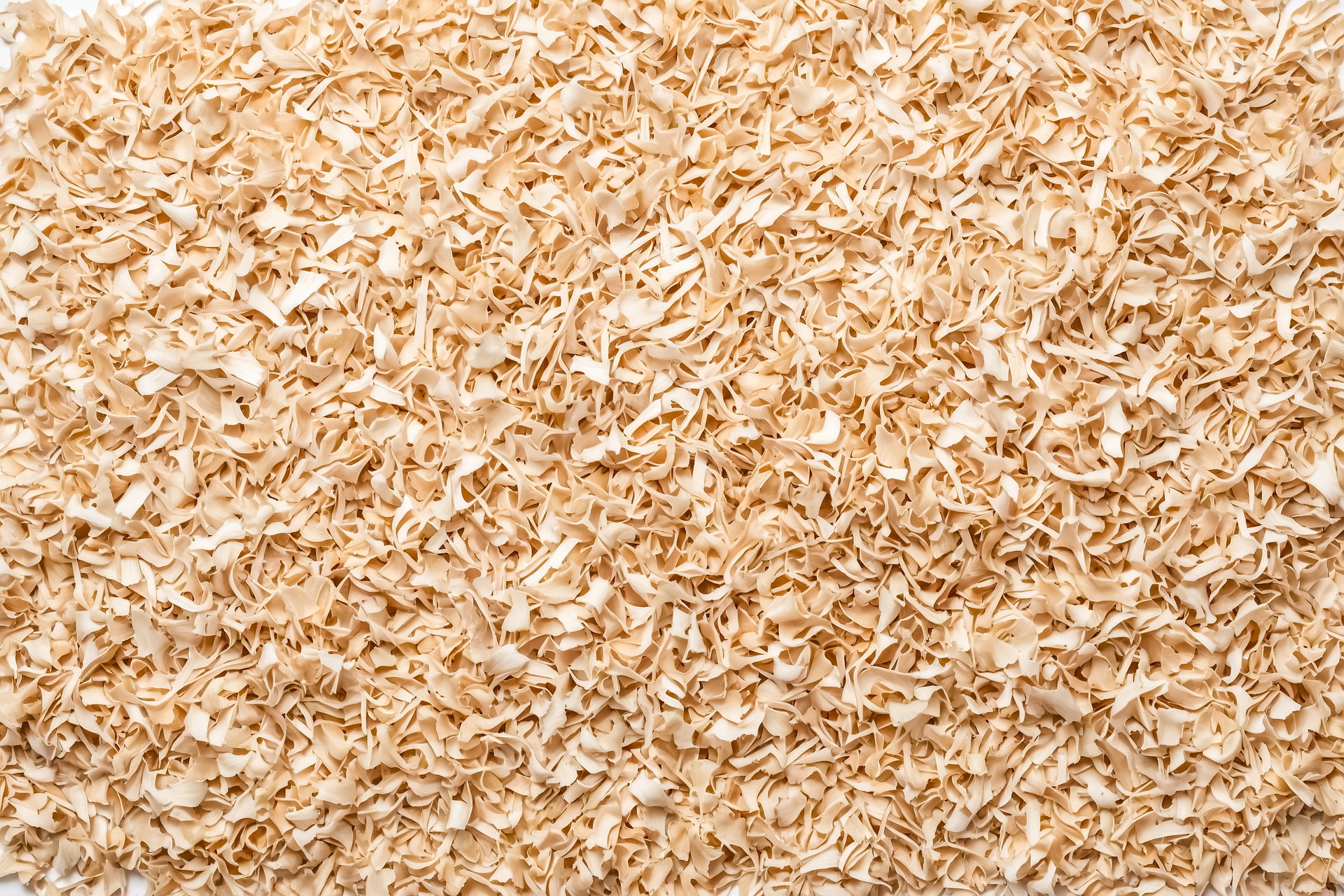
Flakes (5-8mm, 8-12mm, 10-15mm): Industrial processing, food service, visible onion presence
Minced (1-3mm, 3-5mm): Seasoning blends, smaller particle applications
Granules (8-16 mesh, 16-40 mesh, 40-80 mesh): Free-flowing applications, spice blends, automated systems
Powder (80-100 mesh, 100-120 mesh): Complete dissolution, fine seasoning, uniform distribution
A processor in Nashik: “New traders order ‘medium flakes’ without specifying ranges, then wonder why batches vary.”
Key insight: Vague specifications create vague results.
At a quality control lab in Mahuva (March 2025), a technician showed me rejected samples with brown edges.
“Processing temperature exceeded 70°C. Natural sugars caramelized,” she explained. “Flavor profile changes—bitter note develops. It indicates uneven drying, affecting shelf stability.”
She uses Pantone color chips (7499C to 7506C range) for visual grading. “White to light cream is target. Anything with more than 5% brown content gets downgraded.”
What Color Variation Reveals
A veteran processor in Deesa: “Significant color variation within the same batch—cream, yellowish, brown tinge—usually means mixed raw material sources. It indicates the processor isn’t maintaining batch-to-batch consistency.”
Understanding: Color isn’t just aesthetic—it’s an indicator of process control.
Laboratory Visit Insights (February-March 2025)
I visited three NABL-accredited laboratories in Gujarat. A lab manager in Ahmedabad surprised me: “We can test 30+ parameters. But most traders only ask for basic moisture, microbiology, maybe ash content. Cost, mostly—comprehensive testing adds ₹3,000-5,000 per batch.”
Standard Testing Parameters
Physical: Moisture content (AOAC 925.10), particle size distribution, bulk density, color
Chemical: Total ash, acid insoluble ash, volatile oil content
Microbiological: Total Plate Count, yeast/mold, Salmonella (absent in 25g), E. coli
Optional (market-specific): Pesticide residue, heavy metals, aflatoxin
A processor in Mahuva: “Gulf markets increasingly ask for pesticide and heavy metal reports. European markets require them. Domestic—rarely.”
The Rehydration Test (Not in Standard COAs)
At a facility in Deesa, a quality supervisor demonstrated something not usually in lab testing:
Method:
1. 10g dehydrated onion + 30ml warm water (40-50°C)
2. Wait 15-20 minutes, drain and observe
Good product: Recovers to 35-40g, firm texture, characteristic aroma
Poor product: Stays leathery or turns mushy
“Why isn’t this standard?” I asked.
“It’s sensory—doesn’t produce numerical results for COA. But processors use it internally.”
Important discovery: Official testing has limitations. Practical performance matters.
At a Bhavnagar facility (March 2025), I examined reject materials. Each told a story:
Brown Discoloration: Ran at 75°C instead of 62-65°C. Equipment malfunction. Burnt edges.
Caking: 6.8% moisture, standard LDPE packaging. After 6 weeks in warehouse, started caking. Should have used higher-barrier film.
Size Inconsistency: Mixed batches from two slicing lines. Someone mixed them during bagging.
Foreign Matter: Stem pieces, root ends. Pre-cleaning line missed these.
Each reject pile showed where process control broke down.
The COA Reality
A customs clearing agent in Mumbai: “Half the COAs I see are worthless. They say ‘satisfactory’ or ‘within limits’ without actual values. Singapore or Indonesia customs asks for specifics—we have problems.”
Vague COA: “Moisture: Within limits”
Useful COA: “Moisture: 5.4% (Method: Loss on Drying, AOAC 925.10)”
“The useful one has actual data, test method reference, can be verified. The vague one is just paper.”
Lab Accreditation Importance
A NABL-accredited lab manager: “NABL accreditation (ISO/IEC 17025:2017) means our protocols, equipment, quality systems are independently verified. Reports are recognized internationally.”
“Non-accredited labs might be accurate, but there’s no independent verification. For export to EU, Singapore, Saudi Arabia—accreditation matters.”
This clarified why accredited labs charge 20-30% more: verifiable credibility.
Gulf Markets (UAE, Qatar, Saudi Arabia)
“Temperature matters. Summer warehousing in Dubai or Doha hits 45°C. Moisture control and packaging barrier properties become critical.”
“Halal certification increasingly expected for retail channels, even though onion is vegetarian. It’s consumer perception.”
Southeast Asia (Indonesia, Singapore)
“Indonesia has high humidity year-round. Basic LDPE doesn’t work for Jakarta conditions.”
“Singapore is quality-focused and documentation-strict. Their SFA scrutinizes COAs, lab
accreditation, everything.”
South Asia (Bangladesh, Nepal)
“These markets move fast—shorter supply chains, faster consumption. Can often accept 6-7% moisture because turnover is quick. Price sensitivity is higher.”
Based on all observations, here’s what emerged:
| Parameter | Target Range | Key Notes |
|---|---|---|
| Moisture | 5.0-6.0% | 5.5% max for Gulf summer |
| Particle Consistency | 90% within spec | Industrial users need this |
| Color | Pantone 7499C-7506C | <5% brown content |
| Total Ash | Max 7% | Mineral content indicator |
| Acid Insoluble Ash | Max 1.5% | Soil/foreign matter indicator |
| Bulk Density | 0.35-0.45 g/ml | Packaging efficiency |
| TPC | <105 CFU/g | Microbiological limit |
| Yeast & Mold | <103 CFU/g | Critical for shelf life |
| Salmonella | Absent in 25g | Regulatory requirement |
Testing Frequency (From Quality Managers)
● Every batch: Moisture, visual inspection, particle size
● Every 5 batches: Complete microbiological panel
● Quarterly: Heavy metals and pesticide residue (international markets)
● Annual: Comprehensive 30+ parameter testing
Why do moisture specifications vary by market?
Veteran exporter, Ahmedabad:
“It’s about destination realities. Gulf summer temperatures, Singapore humidity, Bangladesh
consumption speed—all affect what moisture stays stable. Specifications aren’t arbitrary.”
When is third-party inspection worth it?
Quality consultant, Mumbai:
“For high-value orders, first-time relationships, critical applications. Independent verification costs ₹5,000-10,000 but catches issues saving ₹50,000-500,000. Risk management, not expense.”
A-grade vs B-grade in practical terms?
Processor, Deesa:
“A-grade: fresh, single-source onions, 90%+ consistency, 5-6% moisture. B-grade: storage onions, 75-85% consistency, 6-7% moisture. Price difference 15-20%. Both have legitimate uses depending on market and application.”
Why don’t more people do rehydration testing?
Quality manager, Mahuva:
“Not required for documentation, takes time. But reveals practical performance COA numbers don’t show. Smart processors do it internally.”
After three months of intensive learning, I understand that quality in dehydrated onion is the intersection of:
● Processing control (temperature, timing, equipment maintenance)
● Raw material selection (source, variety, freshness)
● Market understanding (destination climate, application, regulations)
● Testing rigor (parameter selection, lab credibility)
● Documentation accuracy (actual data, verifiable methods)
Long-term successful businesses aren’t necessarily those with lowest prices—they’re the ones
understanding these intersections and delivering consistency.
Three months taught me fundamentals, but this is a deep industry with decades of accumulated
knowledge. Every conversation reveals something new. Every processing visit shows variations I hadn’t seen.
The veterans I spoke with—some with 20-30 years experience—are still learning, adapting to
changing markets, new regulations, evolving preferences.
This article captures what I’ve learned so far. It’s a starting point, a framework for understanding quality in practical terms.
If you’re in this industry and see something I’ve missed or misunderstood, I’m genuinely interested in learning more.
Field Research (January-March 2025):
● 18 processing facility visits across Gujarat and Maharashtra
● 3 NABL-accredited laboratory visits
● 2 food manufacturing facility visits
Industry Conversations:
● 30+ interviews with processors, quality managers, exporters, traders
● Discussions with lab technicians and quality consultants
● Conversations with customs agents and freight forwarders
● APEDA trade meetings and industry gatherings
Technical References:
● FSSAI FSS Regulations 2011 (amendments through 2024)
● Codex Alimentarius CAC/RCP 5-1971 (Rev. 2023)
● AOAC International Method 925.10, 21st Edition
● Indian Standards IS 5560:2009
● APEDA Export Guidelines 2024
● NABL ISO/IEC 17025:2017
● ADOGA quality guidelines
Documentation Analysis:
● 50+ Certificates of Analysis reviewed
● Export documentation from multiple shipments
● Market-specific requirement documents